The Stranglers formed as the Guildford Stranglers in the southern England village of Chiddingfold (near Guildford) in 1974, plowing a heavily Doors-influenced furrow through the local pub rock scene -- such as it was. Of the four founding members, only Hugh Cornwell had any kind of recognizable historical pedigree, having played alongside Richard Thompson in the schoolboy band Emil & the Detectives. According to Thompson, their repertoire stretched from "Smokestack Lightning" and the blues, through to "old Kiki Dee B-sides," while their gigging was largely confined to the Hornsey School of Art, where Thompson's sister was Social Secretary.
The Guildford Stranglers were confined to a similar circuit. It was 1975 before they ventured into even the London suburbs, although once there -- and having shortened their name to the less parochial Stranglers -- things began moving quickly. The established pub rock scene was dying and promoters were willing to give any unknown band a break, simply to try and establish a new hierarchy. Thus it was that as the first stirrings of punk began to make their own presence felt on the same circuit, the Stranglers were on board the bandwagon from the beginning.Their early songs, too, radiated the same ugly alienation that was the proto-punk movement's strongest calling card. Material like "Peasant in the Big Shitty," "I Feel Like a Wog," "Down in the Sewer," and "Ugly" itself were harsh, uncompromising, and grotesque, a muddy blurge of sound cut through with Dave Greenfield's hypnotically Doors-like keyboards that was possessed of as much attitude as it was detectable musical competence. One uses the word guardedly, but "highlights" of this period were included on the 1994 archive release Live, Rare & Unreleased 1974-1976.
By mid-1976 the Stranglers already had enough force behind them to be booked as opening act at the Ramones' first London show, and Mark P., editor of the newly launched punk fanzine Sniffin' Glue, conferred further punk approval on the band when he wrote, "their sound is 1976...the Stranglers are a pleasure to boogie to -- sometimes they sound like the Doors, other times like Television, but they've got an ID of their own." Further prestige accompanied the band's opening slot for Patti Smith in October -- and that despite most of the audience walking out long before the band left the stage; by the time the band set out on their own first U.K. tour, they had signed with UA (A&M in America) and were preparing to record their debut album with producer Martin Rushent.
"(Get A) Grip (On Yourself)," the Stranglers' debut single, made the lower reaches of the Top 50; Rattus Norvegicus, their first album, confirmed the group as one of the fastest developing bands on the entire scene -- even as the scene itself still puzzled over whether the Stranglers even belonged on board. "Old hairy misogynists" was a common accusation to fling in their direction, and it was one which the Stranglers themselves delighted in encouraging. In a more PC climate, their first U.K. Top Ten hit, summer 1977's "Peaches," would never even have been written, let alone recorded, while the bandmembers' reputation as sexual bad boys was only exacerbated by other songs in their repertoire: "London Lady," "Bring on the Nubiles," "Choosy Susie."
The fact that much of their lyrical prowess was built around the darkest hued of black humors never entered many people's minds at the time, but listen again to their finest moments -- "Hangin' Around," "Down in the Sewer," the mindless boogie of "Go Buddy Go," and the sheer vile joys of "Ugly" -- and try to keep an even halfway straight face.
Unfortunately, though the Stranglers themselves reveled in an almost Monty Python-esque grasp of absurdity (and, in particular, the absurdities of modern "men's talk"), there was an undercurrent of violence that not only permeated their music, it also, inevitably, spilled into their live shows. Their fall 1977 British tour was marred by some very ugly scenes, while a trip to Sweden brought them into violent confrontation with the Raggere, that country's equivalent of Britain's punk-hating Teddy Boys. Hugh Cornwell's choice of T-shirts (a Ford logo reworked to read "F*ck") brought the band into conflict with London's local council, while the group's decision to line their stage with topless dancing girls when they played a concert in that city's Battersea Park brought women's groups screaming down on them, too.Yet despite so much controversy, the Stranglers' grip on the British chart seemed unbreakable. "Peaches" was followed by "Something Better Change" and might easily have been joined by a passionate cover of "Mony Mony" had the band not opted to hide behind the pseudonym of the Mutations, accompanying singer Celia Gollin on the number. (A second Celia & the Mutations single, "You Better Believe Me," followed late in 1977.) "No More Heroes," the driving title track to the Stranglers' second album, was another huge hit, although the album itself was a disappointment -- recorded in a hurry, with little time to write new material, it was largely comprised of older songs that had been passed over for Rattus. Within months, a new Stranglers album was on the streets, and this time they got everything right. Black and White was previewed by the hits "Five Minutes" and "Nice'n'Sleazy" (self-mythology in a nutshell), and was swiftly followed by one of the band's finest moments, a murderously slowed-down version of Bacharach/David's "Walk on By."More importantly, Black and White was the last Stranglers album to even flirt with the socio-sexual shock troop imagery that fired their first records; with the live X Cert album (their first for IRS in America) rounding off 1978 with a final flurry of gruffness, the band was now free to experiment beyond even the most indulgent fan's wildest imaginings.
1979's The Raven saw them moving toward both psychedelia and radio-friendly pop -- "The Duchess," Top 20 that summer, was a classic tune by anybody's standards and, while a flurry of solo activity from Jean Jacques Burnel (The Euroman Cometh) and Hugh Cornwell (Nosferatu) raised rumors that the band was reaching the end of its lifespan, in fact it was their non-musical activities that came closest to bursting the bubble, after Cornwell was sentenced to three months imprisonment for drug possession in January 1980.The band regrouped following his release and banged out two albums in a year, the concept Meninblack and the extraordinarily ambitious La Folie -- home of their biggest hit single yet, "Golden Brown." It reached number two in Britain, although two other singles from the same album, "Let Me Introduce You to the Family" and "La Folie" itself, contrarily proved among their least successful so far."Strange Little Girl," specially recorded for the hits compilation The Collection 1977-1982, returned the band to the Top Ten the following summer and, having moved from UA to Epic, the Stranglers rounded out 1982 with the "European Female" single and Feline album, defiantly pop-heavy albums flavored by the group's own special take on the then-prevalent synthesizer sounds. This phase of the band's development reached a nadir of sorts with 1984's Aural Sculpture, the least engaging of their albums to date, and the least successful -- it faltered at number 14, with the exquisite "Skin Deep" single drawn up one place lower.Two years of near silence followed, punctuated only by a succession of under-performing British 45s -- American releases were even rarer. "Nice in Nice," a commentary on a six-year-old misadventure in the French city of that name, "Always the Sun," "Big in America," and "Shakin' Like a Leaf," drawn from the 1986 album Dreamtime, ensured the band remained very much a sideshow into the late '80s, but 1988 finally brought a massive turnaround in their fortunes. That January, a wildly churning cover of the Kinks' "All Day and All of the Night" powered the Stranglers back into the Top Ten, to be followed by a new live album of the same name.
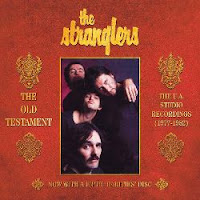
Another long silence followed but, sticking with covers, the Stranglers were back to their best with ? & the Mysterians' "96 Tears" in early 1990, a taster for the album 10. A second hits collection, Greatest Hits 1977-1990, stuffed stockings across Europe that Christmas, but any serious attempt at a lasting revival was stymied by the departure of Cornwell for a solo career. He was replaced by John Ellis, a former member of fellow pub-to-punk graduates the Vibrators, and Sniff 'n' the Tears frontman Paul Roberts, and the new-look Stranglers re-emerged on the China indie in early 1992.A new album, Stranglers in the Night, appeared that fall, together with the minor hit "Heaven or Hell"; by year's end, however, drummer Jet Black, too, had departed. He was replaced by Tikake Tobe and, in this form, the group recorded yet another live album, Saturday Night Sunday Morning, before Black returned for 1995's About Time. The group's studio set Coup de Grace was issued in 1998, after which Ellis left the band, to be replaced by Baz Warne. Their next album, Norfolk Coast, was a surprise success in 2004, spawning a Top 40 hit in "Big Thing Coming." After this record, Roberts departed and the group released Suite XVI in 2006. Six years later, they put out their 17th album, Giants.Each of their UA/Epic albums was reissued with generous helpings of bonus tracks, while 1992 saw the release of a classic 1977 live show, Live at the Hope & Anchor, together with a collection of the band's (surprisingly inventive) 12" singles and a fabulous box set drawn from the 1976-1982 period, The Old Testament. Further live albums have since appeared, as has a remarkable document of the band's three BBC sessions, from 1977 and 1982.
That it is those earliest years that remain the Stranglers' most popular is not surprising -- from bad-mannered yobs to purveyors of supreme pop delicacies, the group was responsible for music that may have been ugly and might have been crude -- but it was never, ever boring. That people are still offended by it only adds to its delight -- if rock & roll (especially punk rock & roll) was meant to be pleasant, it would never have changed the world, after all. The fact that much of the Stranglers' message was actually hysterically funny -- as they themselves intended it to be -- only adds to their modern appeal. And the fact that their fans are still called upon to defend them only proves what humorless zeroes their foes really were.
Eurythmics
Eurythmics were one of the most successful duos to emerge in the early '80s. Where most of their British synth pop contemporaries disappeared from the charts as soon as new wave faded away in 1984, Eurythmics continued to have hits until the end of the decade, making vocalist Annie Lennox a star in her own right, as well as establishing instrumentalist Dave Stewart as a successful, savvy producer and songwriter. Originally, the duo channelled the eerily detached sound of electronic synthesizer music into pop songs driven by robotic beats. By the mid-'80s, singles like "Sweet Dreams (Are Made of This)" and "Here Comes the Rain Again" had made the group into international stars, and the group had begun to experiment with their sound, delving into soul and R&B. As the decade wore on, the duo's popularity eroded somewhat -- by the late '80s, they were having trouble cracking the Top 40 in America, although they stayed successful in the U.K. During the early '90s, Eurythmics took an extended hiatus, as both Lennox and Stewart pursued solo careers.The origins of Eurythmics lay in the Tourists, a British post-punk band of the late '70s formed by Lennox and Stewart. The pair met in London while she was studying at the Royal Academy of Music. Stewart had recently broken up his folk-rock group Longdancer and was writing songs with guitarist Pete Coombes. Immediately after meeting, Stewart and Lennox became lovers and musical partners, forming a group called Catch with Coombes, which quickly evolved into the Tourists in 1979. Though the band only was together for two years, the Tourists released three albums -- The Tourists, Reality Effect, and Luminous Basement -- which all were moderate hits in England; two of their singles, "I Only Want to Be With You" and "So Good to Be Back Home Again," became Top Ten hits.
During 1980, Lennox and Stewart's romantic relationship dissolved and, along with it, so did the Tourists. Though they were no longer lovers, Lennox and Stewart decided to continue performing together under the name Eurythmics and headed to Germany to record their debut album. Featuring support from various members of Can and Blondie drummer Clem Burke, among others, the duo's debut, In the Garden, was released in 1981 to positive reviews, but weak sales. Following the failure of In the Garden, Stewart set up a home studio and Eurythmics recorded a second album, Sweet Dreams (Are Made of This), which was released in 1983.
"Love Is a Stranger" was the first British single pulled from the album, and it became a minor hit in the fall of 1982, a few months before the LP appeared. The title track was released as a single in the spring, and it rocketed to number two on the U.K. charts; shortly afterward, it climbed to number one on the American charts. "Sweet Dreams (Are Made of This)" was helped enormously by its stylish, androgynous video, which received heavy airplay from MTV, who had only recently become a major influence within the music industry. After "Sweet Dreams," Eurythmics re-released "Love Is a Stranger" and it reached the U.K. Top Ten (number 23 U.S.), beginning a string of hit singles that ran for a year. Touch, the duo's third album, was released toward the end of 1983 and continued their success throughout 1984, spawning the hits "Who's That Girl?" (number three, U.K.; number 21, U.S.), "Right by Your Side" (number ten, U.K.; number 29, U.S.), and "Here Comes the Rain Again" (number eight, U.K.; number four U.S.). During the course of 1984, Annie Lennox's theatrical gender-bending was becoming increasingly notorious, which helped their record sales. At the end of the year, they released the soundtrack for the film adaptation of 1984, which received poor reviews and sales, despite the Top Ten U.K. placing of its single, "Sexcrime (Nineteen Eighty-Four)."
Released in the spring of 1985, Eurythmics' fourth album, Be Yourself Tonight, boasted a tougher, R&B-influenced sound and featured a duet with Aretha Franklin, "Sisters Are Doin' It for Themselves." The duet became one of three hit singles from the album, in addition to "Would I Lie to You?" (number 17, U.K.; number five, U.S.) and "There Must Be an Angel (Playing with My Heart)" (number one, U.K.; number 22, U.S.). Revenge, released the following year, followed the R&B and soul inclinations of Be Yourself Tonight to a harder-rocking conclusion. Though the album peaked at number 12 in the U.S. and spawned the number 14 hit "Missionary Man," its sales were noticeably weaker than its predecessor. In the U.K., the group was slightly more popular -- "Thorn in My Side" reached the Top Ten -- but it was evident that the group was past the point of its peak popularity.
As appropriate for a group passing their commercial pinnacle, Eurythmics began branching out into other areas. During 1985 and 1986, Dave Stewart produced a number of superstars, including Bob Dylan, Daryl Hall, Tom Petty, and Mick Jagger. Annie Lennox began a short-lived acting career, appearing in Revolution. Eurythmics reconvened in 1987 to release Savage, which was greeted with mixed reviews and weak sales. That same year, Stewart married Siobhan Fahey, a former member of Bananarama who had also appeared in the "Who's That Girl" video; she would later be a member of Shakespear's Sister, which was produced by Stewart. In 1988, Lennox had a hit duet with Al Green with "Put a Little Love in Your Heart," taken from the Scrooged soundtrack. The following year, Eurythmics released We Too Are One, which sold well in Britain, reaching number one, but poorly in America, despite "Don't Ask Me Why" becoming their first Top 40 hit since "Missionary Man." Furthermore, the reviews were decidedly mixed on the album.
Eurythmics quietly went on hiatus as of 1990, releasing Greatest Hits the following year. Lennox began a solo career in 1992, releasing Diva, an album that would eventually sell over two million copies. Stewart continued producing records and writing film soundtracks, as well as forming a band called Spiritual Cowboys. In 1995, he officially launched a solo career with the release of Greetings from the Gutter. Lennox and Stewart re-formed Eurythmics in 1999, releasing Peace, their first new studio album in a decade.
The B-52s
The first of many acts to cement the college town of Athens, Georgia, as a hotbed of alternative music, and one of the first American new wave acts to fuse retro-styled rock & roll with dance-friendly rhythms, the B-52s took their name from the Southern slang for the mile-high bouffant wigs sported by singers Kate Pierson and Cindy Wilson, a look emblematic of the band's campy, thrift-store aesthetic. The five-piece group, which also included vocalist Fred Schneider, guitarist Ricky Wilson (Cindy's older brother), and drummer Keith Strickland, formed in 1976 after a drunken evening at a Chinese restaurant; the bandmembers had little or no previous musical experience, and performed most of their earliest shows with taped guitar and percussion accompaniment.
In 1978, after gaining enough confidence to venture into a recording studio, the B-52s pressed up a few thousand copies of the single "Rock Lobster," which became a modest hit on the nascent alternative rock circuit. The B-52s soon traveled to New York City, playing their first paying gig at the famed rock club Max's Kansas City. Subsequent appearances at CBGB brought the group to the attention of the New York press, and in 1979 the B-52s signed a recording contract with Warner Bros. for the United States and Island for the U.K. and Europe; Island founder Chris Blackwell flew the band to the Bahamas, where they quickly recorded their self-titled debut album, a collection of manic, bizarre, and eminently danceable songs that scored an underground club hit with a reworked version of "Rock Lobster." The following year, they issued Wild Planet, which reached the Top 20 on the U.S. album charts; Party Mix!, an EP's worth of reworked material from the band's first two proper outings, appeared in 1981.
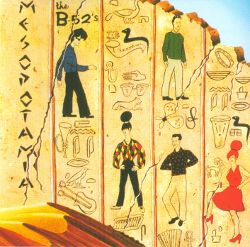
Hoping to expand their musical approach, the B-52s recruited friend and fan David Byrne to produce their third album, but by all accounts, the bandmembers (and their record labels) were not happy with the results, which emphasized a darker, funkier sound and minimized Ricky Wilson's guitar and the group's playful side. Ultimately, Byrne and the B-52s walked away from the project, and six completed tracks were released as an EP, 1982's Mesopotamia. After a Schneider solo LP, 1984's Fred Schneider & the Shake Society, the group returned to the studio to record 1986's Bouncing Off the Satellites. While the album tried to put a brave face on a difficult situation, Ricky Wilson was seriously ill while recording the LP, and on October 12, 1985, Ricky died; originally his death was attributed to natural causes, but it was later revealed that he had succumbed to AIDS-related illnesses. In light of Wilson's death, the B-52s found it impossible to promote the new album, and they spent the next several years on hiatus.
In 1989, the B-52s finally returned with Cosmic Thing, which became their most commercially successful effort to date. Marked by Strickland's move from drums to guitar and club-friendly production from Don Was and Nile Rodgers, the album launched several hit singles, including the party smash "Love Shack," "Roam," and "Deadbeat Club." In 1990, Cindy Wilson retired from active duty, leaving the remaining trio to soldier on for 1992's Good Stuff. A year later, dubbed the BC-52s, they performed the theme song for the live-action feature The Flintstones. In 1996, Fred Schneider released his second solo album, Just Fred, produced by Steve Albini and featuring accompaniment from members of the Didjits, Jon Spencer Blues Explosion, Six Finger Satellite, and Shadowy Men on a Shadowy Planet. Cindy Wilson returned to the group for a tour supporting the release of the 1998 hits collection Time Capsule: Songs for a Future Generation. Four years later, the double-disc compilation Nude on the Moon: The B-52's Anthology would dive deeper into their catalog by featuring rare tracks, live recordings, and remixes along with the hits.
In 2008, after 16 years away from the studio while the band toured periodically, the B-52s returned with a new album; released by Astralwerks, Funplex was a slick, synthesizer-driven effort produced by Steve Osborne. Meanwhile, Fred Schneider recorded a handful of singles and EPs with his side project the Superions, and in February 2015, Kate Pierson issued her first solo album, Guitars and Microphones. In April 2015, the B-52s released a digital-only archival release, Live! 8-24-1979, recorded as the band opened for Talking Heads just six weeks after their debut album was released.
In 1978, after gaining enough confidence to venture into a recording studio, the B-52s pressed up a few thousand copies of the single "Rock Lobster," which became a modest hit on the nascent alternative rock circuit. The B-52s soon traveled to New York City, playing their first paying gig at the famed rock club Max's Kansas City. Subsequent appearances at CBGB brought the group to the attention of the New York press, and in 1979 the B-52s signed a recording contract with Warner Bros. for the United States and Island for the U.K. and Europe; Island founder Chris Blackwell flew the band to the Bahamas, where they quickly recorded their self-titled debut album, a collection of manic, bizarre, and eminently danceable songs that scored an underground club hit with a reworked version of "Rock Lobster." The following year, they issued Wild Planet, which reached the Top 20 on the U.S. album charts; Party Mix!, an EP's worth of reworked material from the band's first two proper outings, appeared in 1981.
Hoping to expand their musical approach, the B-52s recruited friend and fan David Byrne to produce their third album, but by all accounts, the bandmembers (and their record labels) were not happy with the results, which emphasized a darker, funkier sound and minimized Ricky Wilson's guitar and the group's playful side. Ultimately, Byrne and the B-52s walked away from the project, and six completed tracks were released as an EP, 1982's Mesopotamia. After a Schneider solo LP, 1984's Fred Schneider & the Shake Society, the group returned to the studio to record 1986's Bouncing Off the Satellites. While the album tried to put a brave face on a difficult situation, Ricky Wilson was seriously ill while recording the LP, and on October 12, 1985, Ricky died; originally his death was attributed to natural causes, but it was later revealed that he had succumbed to AIDS-related illnesses. In light of Wilson's death, the B-52s found it impossible to promote the new album, and they spent the next several years on hiatus.
In 1989, the B-52s finally returned with Cosmic Thing, which became their most commercially successful effort to date. Marked by Strickland's move from drums to guitar and club-friendly production from Don Was and Nile Rodgers, the album launched several hit singles, including the party smash "Love Shack," "Roam," and "Deadbeat Club." In 1990, Cindy Wilson retired from active duty, leaving the remaining trio to soldier on for 1992's Good Stuff. A year later, dubbed the BC-52s, they performed the theme song for the live-action feature The Flintstones. In 1996, Fred Schneider released his second solo album, Just Fred, produced by Steve Albini and featuring accompaniment from members of the Didjits, Jon Spencer Blues Explosion, Six Finger Satellite, and Shadowy Men on a Shadowy Planet. Cindy Wilson returned to the group for a tour supporting the release of the 1998 hits collection Time Capsule: Songs for a Future Generation. Four years later, the double-disc compilation Nude on the Moon: The B-52's Anthology would dive deeper into their catalog by featuring rare tracks, live recordings, and remixes along with the hits.
In 2008, after 16 years away from the studio while the band toured periodically, the B-52s returned with a new album; released by Astralwerks, Funplex was a slick, synthesizer-driven effort produced by Steve Osborne. Meanwhile, Fred Schneider recorded a handful of singles and EPs with his side project the Superions, and in February 2015, Kate Pierson issued her first solo album, Guitars and Microphones. In April 2015, the B-52s released a digital-only archival release, Live! 8-24-1979, recorded as the band opened for Talking Heads just six weeks after their debut album was released.
Thomas Dolby
Though he never had many hits, Thomas Dolby became one of the most recognizable figures of the synth pop movement of early-'80s new wave. This was largely due to his skillful marketing. Dolby promoted himself as a kind of mad scientist, an egghead who had successfully harnessed the power of synthesizers and samplers and used them to make catchy pop and light electro-funk. Before he launched a solo career, Dolby had worked as a studio musician, technician, and songwriter; his most notable work as a songwriter was "New Toy," which he wrote for Lene Lovich, and Whodini's "Magic's Wand.
In 1981 he launched a solo career, which resulted in a number of minor hits and two big hits: "She Blinded Me with Science" (1982) and "Hyperactive" (1984). Following "Hyperactive," his career faded away, as he began producing more frequently, as well as exploring new synthesizer and computer technology. Dolby continued to record into the '90s, but by that time, he was strictly a cult act.
Dolby's interest in music arose through his interest in computers, electronics, and synthesizers. The son of a British archaeologist, Thomas Dolby (b. Thomas Morgan Robertson, October 14, 1958) originally attended college to study meteorology, but he was soon sidetracked by electronics, specifically musical equipment. He began building his own synthesizers when he was 18 years old. Around the same time, he began to learn how to play guitar and piano, as well as how to program computers. Eventually, his schoolmates gave him the nickname of "Dolby," which was the name for a noise-reduction technology for audiotapes; he would eventually take the nickname as a stage name.In his late teens, Dolby was hired as a touring sound engineer for a variety of post-punk bands, including the Fall, the Passions, and the Members; on these dates, he would use a PA system he had built himself. In 1979 he formed the arty post-punk band Camera Club with Bruce Woolley, Trevor Horn, Geoff Downes, and Matthew Seligman. Within a year, he had left the group and joined Lene Lovich's backing band. Dolby gave Lovich his song "New Toy," which became a British hit in 1981. That same year he released his first solo single, "Urges," on the English independent label Armageddon. By the fall he had signed with Parlophone and released "Europa and the Pirate Twins," which nearly cracked the U.K. Top 40.
Dolby started playing synthesizer on sessions for other artists in 1982. That year he appeared on Foreigner's 4, Def Leppard's Pyromania, and Joan Armatrading's Walk Under Ladders. Also in 1982, he wrote and produced "Magic's Wand" for Whodini; the song became one of the first million-selling rap singles. Even with all of these achievements, 1982 was most noteworthy for the release of Dolby's first solo album, The Golden Age of Wireless, in the summer of 1982; the record reached number 13 in England, but was virtually forgotten in America. "Windpower," the first single from the record, became his first Top 40 U.K. hit in the late summer.In January of 1983 Dolby released an EP, Blinded by Science, which included a catchy number called "She Blinded Me with Science" that featured a cameo vocal appearance by the notorious British eccentric Magnus Pike, who also appeared in the song's promotional video. Blinded by Science was a minor hit in England, but the EP and the single became major American hits in 1983, thanks to MTV's heavy airplay of the "She Blinded Me with Science" video. Eventually, the song reached number five on the U.S. charts and it was included on a re-sequenced and reissued version of The Golden Age of Wireless, which peaked at number 13 in America.The Flat Earth, Dolby's second album, appeared in early 1984 and was supported by the single "Hyperactive." The single became his biggest U.K. hit, peaking at number 17. Though The Flat Earth reached number 35 on the U.S. charts, Dolby's momentum was already beginning to slow: none of the singles released from the album cracked the American Top 40. Nevertheless, Dolby was in demand as a collaborator and he worked with Herbie Hancock, Howard Jones, Stevie Wonder, George Clinton, and Dusty Springfield. In 1985 he produced Clinton's Some of My Best Jokes Are Friends, Prefab Sprout's Steve McQueen (Two Wheels Good in the U.S.), and Joni Mitchell's Dog Eat Dog, as well as supporting David Bowie at Live Aid. Also in 1985, he began composing film scores, starting with Fever Pitch. In 1986 he composed the scores for Gothic and Howard the Duck, to which he credited himself as Dolby's Cube. That credit led to a lawsuit from the Dolby Labs, who eventually prohibited the musician from using the name "Dolby" in conjunction with any other name than "Thomas."Aliens Ate My Buick, Dolby's long-delayed third album, appeared in 1988 to poor reviews and weak sales, even though the single "Airhead" became a minor British hit. That same year, Dolby married actress Kathleen Beller. For the rest of the late '80s and early '90s, he continued to score films, producing and building his own computer equipment. His fourth album, Astronauts & Heretics, was released in 1992 on his new label, Giant. Despite the presence of guest stars like Eddie Van Halen, Jerry Garcia, Bob Weir, and Ofra Haza, the album was a flop. The following year Dolby founded the computer software company Headspace, which released The Virtual String Quartet as its first program. For the rest of the '90s, Headspace occupied most of Dolby's time and energy. In 1994 he released The Gate to the Mind's Eye, a soundtrack to the videotape Mind's Eye. Also that year, Capitol released the greatest-hits collection Retrospectacle.In 2003 he released the live album Forty, originally issued as a limited-edition, home-packaged, signed and numbered release (of which only 1,000 were pressed), although it was later pressed as a readily available CD. A tour of America would be documented on The Sole Inhabitant Live Concert, released in 2006. In 2009 The Singular Thomas Dolby collection would be released in conjunction with expanded reissues of The Golden Age of Wireless and The Flat Earth. A new studio album, A Map of the Floating City, followed in 2011, with guest appearances from Mark Knopfler, Regina Spektor, Imogen Heap, and others.
Lene Lovich
One of the more offbeat and memorable figures in new wave, Lene Lovich certainly drew much of her widely varied approach from her unconventional early experiences. Born of a Yugoslavian father and British mother, she spent much of her childhood in Detroit, MI. At age 13, she moved to Hull, England, with her mother. She ran away to London shortly thereafter, where she worked several odd jobs ranging from bingo caller to go-go dancer to street busker. Around this time, she developed an interest in art and theater, enrolling at the Central School of Art.
She took up the saxophone and, after a brief stint in a soul-funk band (with future collaborator Les Chappell), Lovich wrote a string of songs for French disco star Cerrone. In 1978, Stiff Records signed her after hearing her first recording, a remake of "I Think We're Alone Now." She quickly became one of Stiff's brightest stars, headlining package tours and earning several U.K. hits over the next three years with the unforgettable "Lucky Number," "Say When," "Bird Song," and "New Toy." Unfortunately, her theatrical quirkiness didn't translate well into LP length, and as new wave dissolved, she disappeared from the music scene. After an eight-year absence, she returned in 1990 with March. It failed to ignite any further interest and she again went into retirement.
Martha and the Muffins
Based in Toronto, Martha and the Muffins initially comprised Martha Johnson (vocals, keyboards), Martha Ladly (vocals, keyboards, trombone), guitarist Mark Gane, bassist Carl Finkle, drummer Tim Gane, and saxophonist Andy Haas.The group formed in 1977 and, on the strength of their debut independent single, "Insect Love"/"Suburban Dream," were signed by Virgin U.K. The band's debut album, Metro Music, appeared in 1980, led by "Echo Beach," which would become a new wave classic.After 1981's This Is the Ice Age, and Danseparc two years later, Johnson and Gane moved the outfit to England and recorded Mystery Walk (1984) and The World Is a Ball (1986) as M+M. From then on, Martha and the Muffins recorded sporadically, releasing Modern Lullaby in 1992 and Delicate in 2010.
Εγγραφή σε:
Αναρτήσεις (Atom)